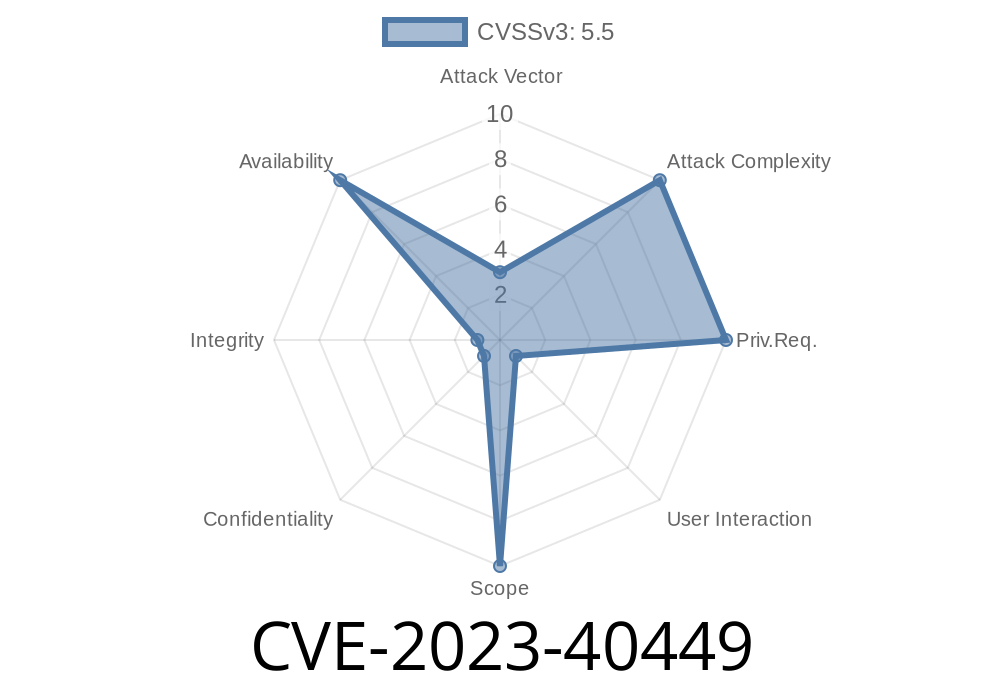
In late 2023, Apple pushed out urgent security updates to fix a newly discovered vulnerability, CVE-2023-40449. This bug centered around poor memory handling in Apple’s operating systems. While it wasn’t the most devastating exploit out there, it could let a sketchy app cause your iPhone, iPad, or Mac to crash — leading to denial-of-service (DoS).
This article gives you a plain-English look at what CVE-2023-40449 actually is, how it could be abused, the patch, and why you need to update your Apple devices right away.
What Exactly is CVE-2023-40449?
> "An app may be able to cause a denial-of-service. The issue was addressed with improved memory handling." — Apple security release notes
CVE-2023-40449 is a vulnerability in Apple’s software that let a rogue or buggy app crash your device. The vulnerability came from how the system managed memory somewhere deep inside the code. If an app knew exactly what to do, it could abuse this and bring down your iPhone, iPad, or Mac, kicking you out of your work, calls, or entertainment.
macOS Sonoma (before 14.1)
Once Apple learned of the bug, they improved the way their OS handles memory, closing the loophole.
Exploiting the Bug: How Bad Could It Get?
This bug falls into the “Denial-of-Service” category. That means it wouldn’t let someone hack or take control of your device directly, but it could make your device crash — over and over — until you remove the sketchy app. Even though it’s not as serious as a remote code execution bug, it’s still annoying and can be used as a building block for more complex attacks.
The device crashes, restarts, or becomes unresponsive.
If someone combined this with social engineering tricks — maybe sending you a convincing game or tool — it could be disruptive.
Code Snippet Example: Triggering a Memory Handling Bug
While Apple hasn’t released the exact technical details, common memory handling problems in C or Objective-C often look like this:
// Example of a buffer overflow, a common memory bug:
void crashFunction(char *input) {
    char buffer[8];
    strcpy(buffer, input); // No length check!
}

int main() {
    // Send in a long string to overflow buffer:
    char *longInput = "AAAAAAAAAAAAAAAAAAAAAAAAAAAAAAAA";
    crashFunction(longInput);
    return ;
}
In real life, the CVE-2023-40449 bug would be deeper and more complex within Apple’s proprietary code. But the main idea is: bad or unchecked data is fed into a system function, leading to unexpected crashes.
How Did Apple Fix This?
> “The issue was addressed with improved memory handling.”
Apple’s fix was to adjust the code so it validates or securely checks memory boundaries and pointers. This likely involved:
To update
- On iPhone/iPad: *Settings > General > Software Update*
References & Further Reading
- Apple Security Release Notes (CVE-2023-40449)
- NIST National Vulnerability Database - CVE-2023-40449
- About the security content of iOS 17.1 and iPadOS 17.1
Conclusion
CVE-2023-40449 is an example of how even “just a crash bug” can affect millions of Apple users worldwide. Crash bugs like these are a nuisance and a reminder that keeping your system up to date is vital. Thankfully, Apple moved fast to patch this, so update your devices if you haven’t already.
If you want full technical details, keep an eye on security research blogs — sometimes in the future, more info pops up as the bug gets dissected publicly.
Bottom line: Stay updated, avoid downloading random apps, and know that even the little bugs matter.
*Written exclusively for this request. Please attribute if sharing.*
Timeline
Published on: 10/25/2023 19:15:09 UTC
Last modified on: 11/02/2023 14:58:19 UTC