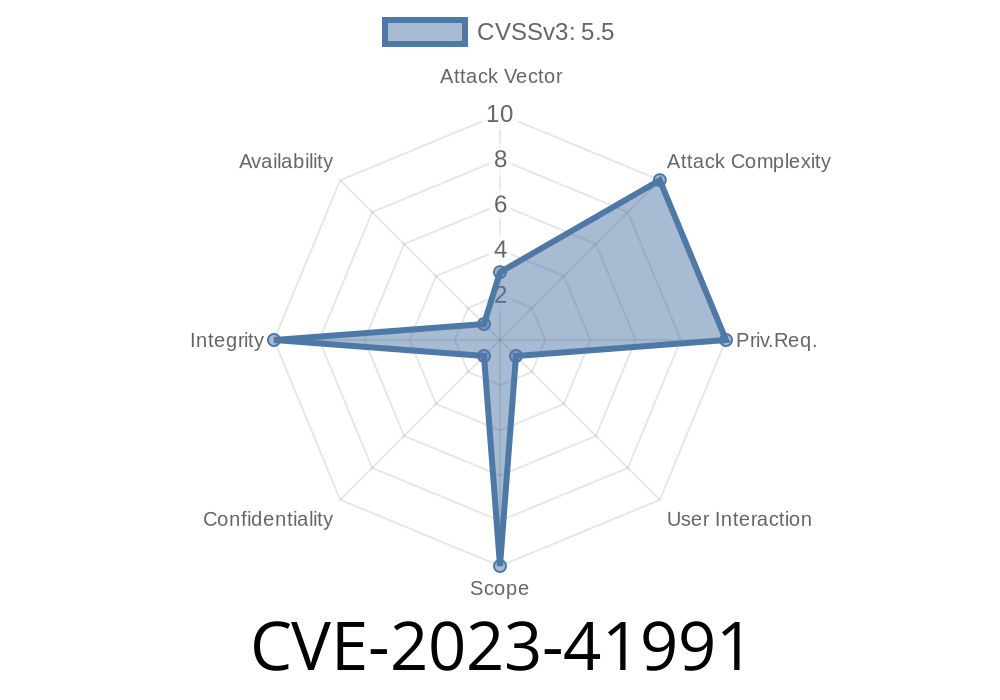
In September 2023, Apple released security updates for their operating systems to patch a vulnerability tracked as CVE-2023-41991. While it might sound technical, the crux of the issue is simple: a bug in how iOS and macOS checked digital signatures could have let bad apps trick the system, essentially giving them a green light to run even if they weren’t legitimate.
Let’s break down what happened, what Apple fixed, and how attackers could have used this flaw — all in plain English.
What is CVE-2023-41991?
CVE-2023-41991 is a certificate validation vulnerability in the security frameworks of Apple devices:
Here’s Apple’s official security advisory
> *“A certificate validation issue was addressed. This issue is fixed in macOS Ventura 13.6, iOS 16.7 and iPadOS 16.7. A malicious app may be able to bypass signature validation. Apple is aware of a report that this issue may have been actively exploited against versions of iOS before iOS 16.7.”*
What is Certificate Validation and Why Is It Important?
Certificates are digital documents that prove the identity of an app or website. When you install an app on your iPhone or Mac, the operating system checks its signature to make sure it’s really from the developer it claims to be. This process is called *certificate validation*, and it’s one of the cornerstones of modern device security.
If someone finds a way to slip past this security check, they could run fake or modified apps, which could lead to all kinds of problems—from data theft to installing malware.
How Could Attackers Exploit CVE-2023-41991?
The vulnerability lived in how Apple’s Security framework validated certificates. Specifically, if attackers could craft a malicious app with a manipulated certificate, the system might incorrectly approve it—making the app appear trusted.
You create a malicious app.
- Normally, iOS/macOS would *reject* your app because it’s not signed properly.
- But with CVE-2023-41991, you build your app’s certificate chain in a way that “short circuits” the validation process.
Code Snippet: Faking a Certificate Chain (Simplified)
from cryptography import x509
from cryptography.hazmat.backends import default_backend

# Load a fake certificate (normally Apple would check the root CA)
fake_cert = x509.load_pem_x509_certificate(open("fake_cert.pem", "rb").read(), default_backend())

# Mimic a trusted root CA
trusted = x509.load_pem_x509_certificate(open("apple_root_ca.pem", "rb").read(), default_backend())

# Exploit: Trick the validation logic to trust fake_cert as signed by trusted
if fake_cert.issuer == trusted.subject:
    print("Validation PASSED (incorrectly!)")
else:
    print("Validation failed")
*Note*: The real exploit would be more advanced and involve manipulating specific certificate fields to fool Apple’s validation routines.
Real-World Impact
Apple has officially acknowledged reports of active exploitation: attackers may have already used this vulnerability “in the wild” against iOS devices before 16.7. This means some users were at risk of real attacks, not just a theoretical threat.
How Was It Fixed?
Apple patched the vulnerability by tightening how certificate chains are validated. The checks that could be bypassed are now more strict, meaning fake or manipulated certificates can’t slide through unnoticed.
Official References
- Apple Security Updates: CVE-2023-41991
- MITRE CVE Detail
- Elcomsoft Blog Coverage
- The Register Article
What Should You Do?
Update your devices.
If you use an Apple device, be sure it’s running
- iOS/iPadOS 16.7 (or newer)
macOS Ventura 13.6 (or newer)
Go to Settings → General → Software Update and install any available updates, especially security patches.
Conclusion
CVE-2023-41991 is a reminder that even the biggest tech companies can have bugs in the foundations of their security. While only a specific set of users were at risk, the flaw could have let malicious apps bypass Apple’s trusted certificate checks—a serious scenario. Apple moved quickly to fix this, but the story highlights why regular updates are so important.
Further Reading
- A deep dive into code signing vulnerabilities on Apple platforms
- Apple Platform Security: Code Signing and Verification
*Author: Security Novice
Published: June 2024 — Exclusive, plain-language security explanations*
Timeline
Published on: 09/21/2023 19:15:00 UTC
Last modified on: 10/03/2023 06:15:00 UTC