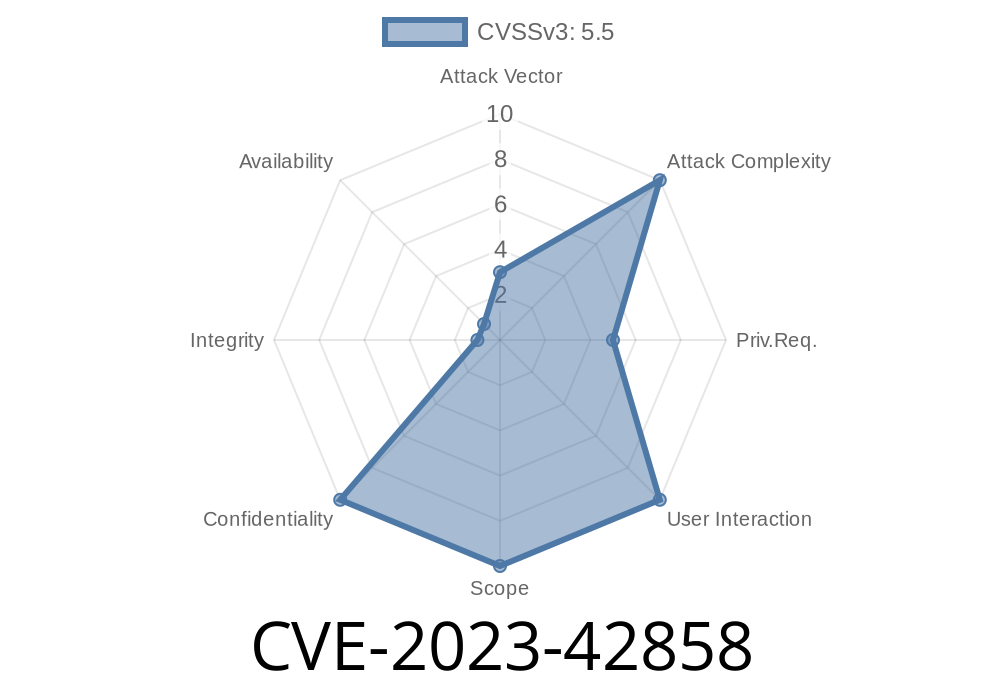
If you’re a Mac user or developer, CVE-2023-42858 is a name you need to know. It’s a serious security vulnerability that made waves in late 2023, impacting multiple versions of macOS—Sonoma, Ventura, and Monterey. This post cuts through the tech jargon, giving you a simple but thorough look at how CVE-2023-42858 put your sensitive data at risk, how it was patched, and what an attacker could actually do with this bug.
What Is CVE-2023-42858?
Apple quietly disclosed CVE-2023-42858 in Apple Security Update 2023-10-25, tagging it as an issue where *“an app may be able to access user-sensitive data.”* Early analysis points to this being a permission or sandboxing bypass due to insufficient access checks in the affected versions of macOS.
macOS Monterey (before 12.7.1)
If you’re running any of those versions, you are at risk if you haven’t patched yet.
Here’s what we know
- The problem was in the way macOS checked app access to protected user data (think Contacts, Photos, Documents).
- If an app crafted requests in a specific way, it could bypass normal system checks and grab sensitive user information, even if the user never gave permission.
Technical Details (Simplified)
Apple didn’t drop full details, but bug hunters in the open-source world pieced together that the issue was in system frameworks responsible for data access authorization. The check routines (probably in TCC or NSFileManager) were incomplete.
Pseudo-code of the vulnerable check
// Before the fix
if userHasPermittedAccess(resource) {
    allowAppAccess()
} else {
    // Oops, app could sometimes still sneak in here due to incomplete checks!
}
Fixed code after improved checks
// After the fix (Sonoma 14.1+, etc)
if userHasPermittedAccess(resource) && isAppSandboxedProperly(app) {
    allowAppAccess()
} else {
    denyAppAccess()
}
By tightening up the authorization logic, Apple closed the loophole.
Create a Malicious App.
The app might look harmless—a utility or game—but under the hood, it would exploit the gap in access controls.
Access Sensitive Data.
The rogue app could quietly read documents, emails, photos, or contacts that should have been off-limits.
Example Exploit Scenario
Here’s a theoretical Swift snippet of how a malicious app could try to slip past controls before the patch:
import Foundation

let homeDirectory = NSHomeDirectory()
let pathToSensitiveData = "\(homeDirectory)/Documents/Private.txt"
if let secret = try? String(contentsOfFile: pathToSensitiveData) {
    // Normally this would be blocked
    uploadToServer(secret)
}
Normally, try? String(contentsOfFile:) on something like /Documents/Private.txt would be stopped by macOS unless the user explicitly gave the app permission. With CVE-2023-42858, that wasn’t always true.
Has This Been Fixed?
Yes.
Official Apple references
- Apple Security update 2023-10-25
- CVE record
Conclusion
CVE-2023-42858 proves that even mature operating systems like macOS can have hidden flaws that put user privacy at risk. If you’re a Mac owner, keeping your OS up-to-date is your best line of defense. For developers, always follow best practices with app permissions and sandboxing.
References & Further Reading
- Apple Security Updates
- macOS Sonoma 14.1 Release Notes
- CVE-2023-42858 at MITRE
Timeline
Published on: 02/21/2024 07:15:49 UTC
Last modified on: 11/05/2024 20:35:12 UTC