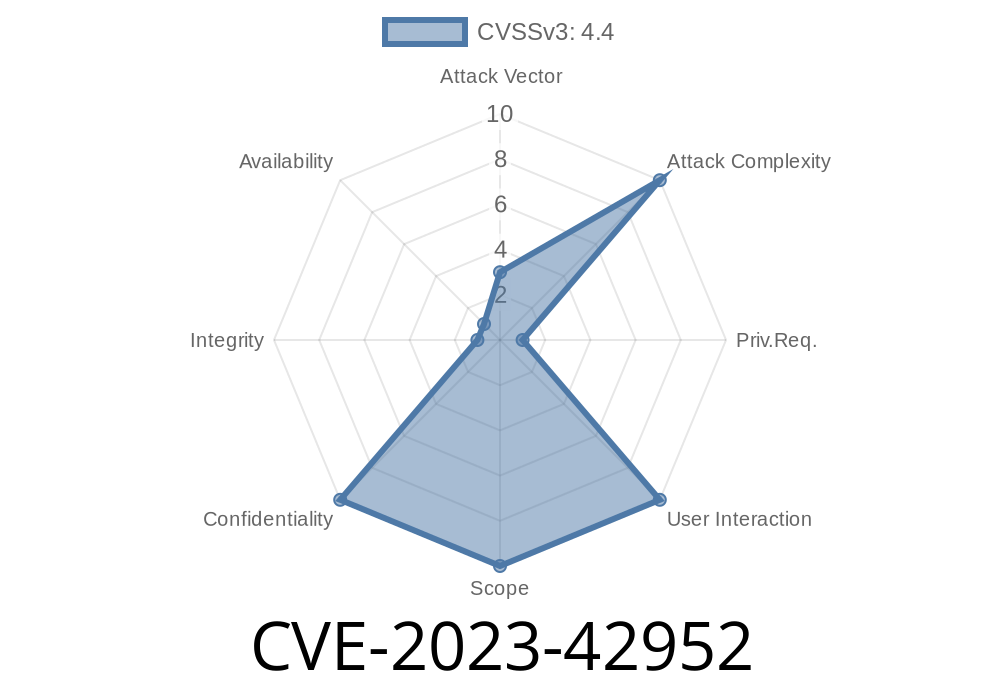
On October 25, 2023, Apple published details about a security flaw identified as CVE-2023-42952. This vulnerability impacted different Apple operating systems, including iOS, iPadOS, macOS Ventura, macOS Sonoma, and macOS Monterey. While it needed an app with root access to exploit, the core problem was that system checks weren’t strong enough, allowing apps to access private user information they shouldn’t see.
In this long read, we go step by step through how CVE-2023-42952 worked, refer to Apple’s official notes, and share what you need to know as a user or developer. We’ll provide easy-to-understand code snippets to show what an attacker might have done, plus resources for further reading.
What Is CVE-2023-42952?
In simple terms, CVE-2023-42952 is a privacy vulnerability found in several Apple operating systems. An attacker could bypass system protections if their malicious app gained root permissions, allowing it to access files or data that are normally off-limits, like sensitive configuration files or even user documents.
Apple Summary:
> “An app with root privileges may be able to access private information. This issue was addressed with improved checks.”
Apple advisory links
- Apple Security Updates
- CVE-2023-42952 page
The Root of the Problem
Apple uses a privacy model where even root users should have limited access to certain private areas (sandboxing). However, sometimes a simple logic mistake or a missing check could let a privileged process reach where it shouldn't.
CVE-2023-42952 was an example of such a mistake. A malicious app—if it managed to get root access—could request or open private files (like user config files, password stores, security tokens, or sensitive logs) outside its sandbox, reading or even modifying them.
Example: How an attack could work
Let’s say there’s a private file at /private/var/mobile/Library/Preferences/com.apple.accountsd.plist holding sensitive settings. Normally, only Apple’s own processes should touch it.
Malicious code in C (simplified example)
#include <stdio.h>
#include <stdlib.h>

int main() {
    const char *sensitiveFile = "/private/var/mobile/Library/Preferences/com.apple.accountsd.plist";
    FILE *fp = fopen(sensitiveFile, "r");
    if (fp) {
        printf("Read succeeded! Private info is accessible!\n");
        // Imagine reading sensitive contents here...
        fclose(fp);
    } else {
        printf("Access denied.\n");
    }
    return ;
}
In a system vulnerable to CVE-2023-42952, running this code as root could succeed, printing and capturing private info.
*Note: Getting root on iOS/iPadOS is usually only possible via jailbreaking or other vulnerabilities. But on macOS, users sometimes unwittingly run sudo apps, or malware tries to escalate privileges.*
Blocking unapproved root processes from reading or writing outside their sandbox
These sorts of changes help make sure root itself is not enough—something must still be allowed by Apple’s internal policies.
Impact: Should You Worry?
If you’re running the latest iOS/iPadOS/macOS versions, you are safe. Apple’s fix blocks such access with extra checks. But if you are on older versions, there is a risk—especially if you run any untrusted apps, or if your device is jailbroken.
- Who is most at risk? Jailbroken iOS/iPadOS devices, Macs running outdated macOS, or users who install random apps with root prompts.
What You Should Do
1. Update now: Install iOS 17.1/iPadOS 17.1, macOS 13.6.3, 14.1, or 12.7.1 ASAP.
Don’t jailbreak your device, unless you know all security trade-offs.
3. Be cautious with apps asking for admin/root privileges.
4. Monitor Apple security pages (HT201222) for future advisories.
More Reading
- Apple’s Official Security Update Docs
- Full CVE-2023-42952 Entry at NIST NVD
- iOS Update Release Notes
Conclusion
CVE-2023-42952 is a classic example of why even privileged apps cannot be fully trusted. Apple’s “improved checks” keep your private data out of reach, even to root-level malware. Always patch promptly and be mindful of apps asking for more power than they need.
Stay safe, and keep your Apple devices up to date!
Timeline
Published on: 02/21/2024 07:15:51 UTC
Last modified on: 12/05/2024 19:56:22 UTC