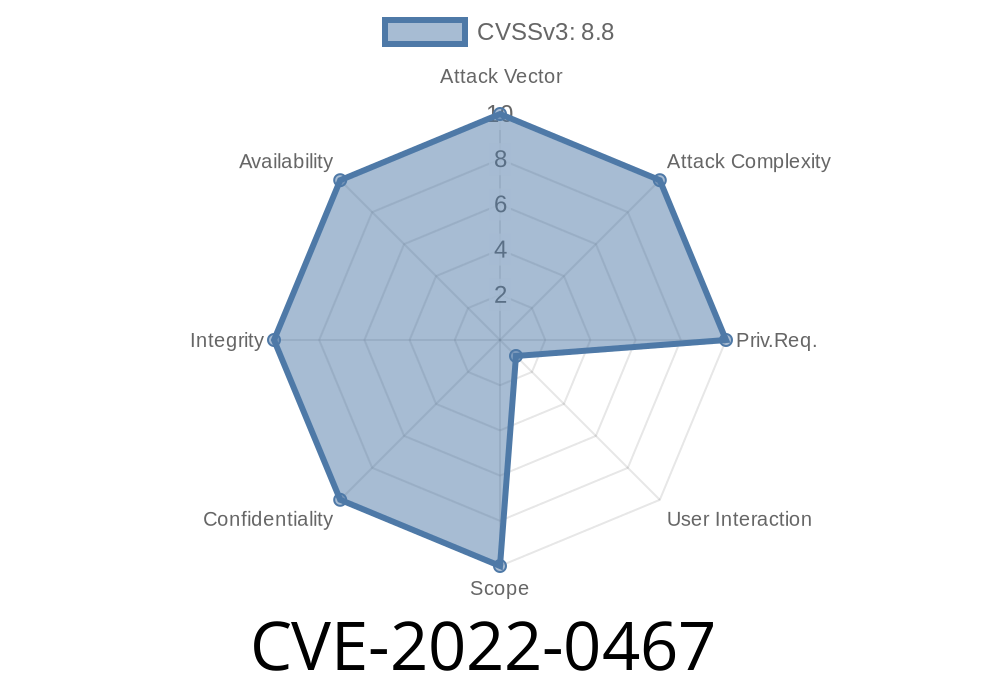
CVE-2022-0467 Inappropriate Pointer Lock implementation allowed a remote attacker to bypass navigation restrictions.
A warning message about the security warning about the SSL/TLS protocol when accessing a Google site was displayed incorrectly in Pointer Lock in Google
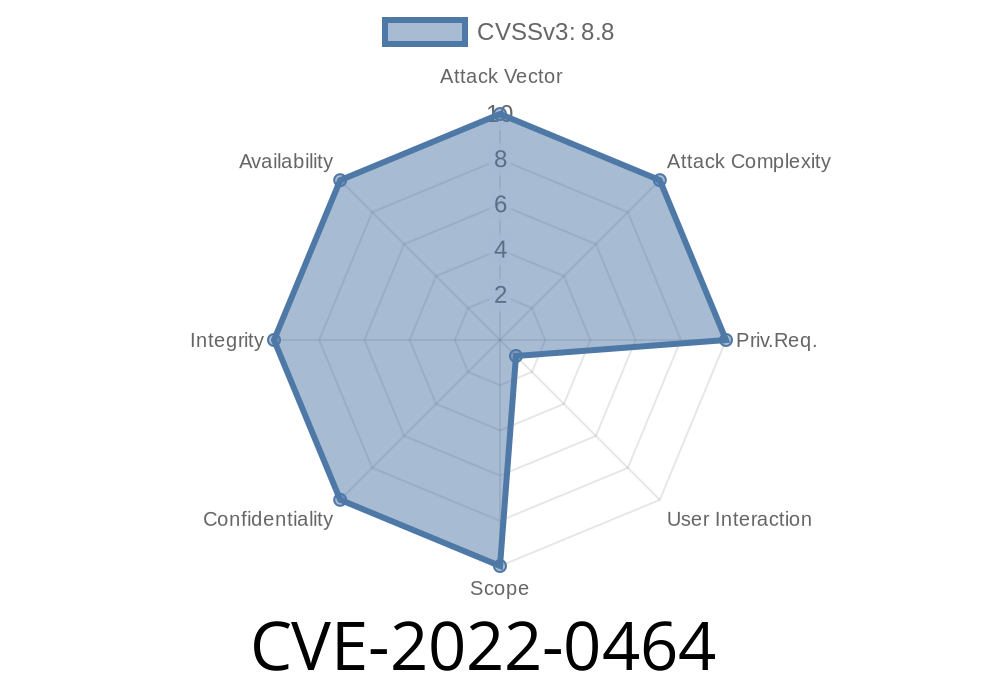
CVE-2022-0464 After free in Accessibility in Google Chrome prior to 98.0.4758.80 allowed a remote attacker to potentially exploit heap corruption by user interaction.
Google applied patch to fix this issue in Accessibility in version 98.0.4758.81. Exploitation of this issue required social engineering with specially crafted
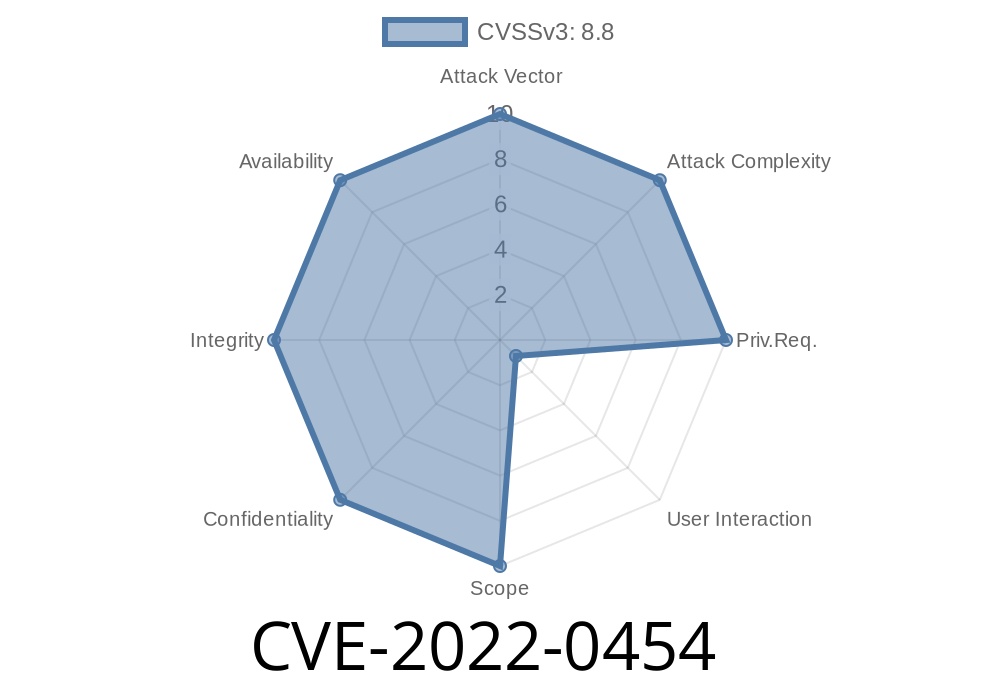
CVE-2022-0454 Heap buffer overflow in ANGLE prior to 98.0.4758.80 allowed a remote attacker to exploit heap corruption.
CVE-2018-6040 had been addressed in this revision. Google informed users via the following security blog post: “An issue was discovered in certain configurations of Google
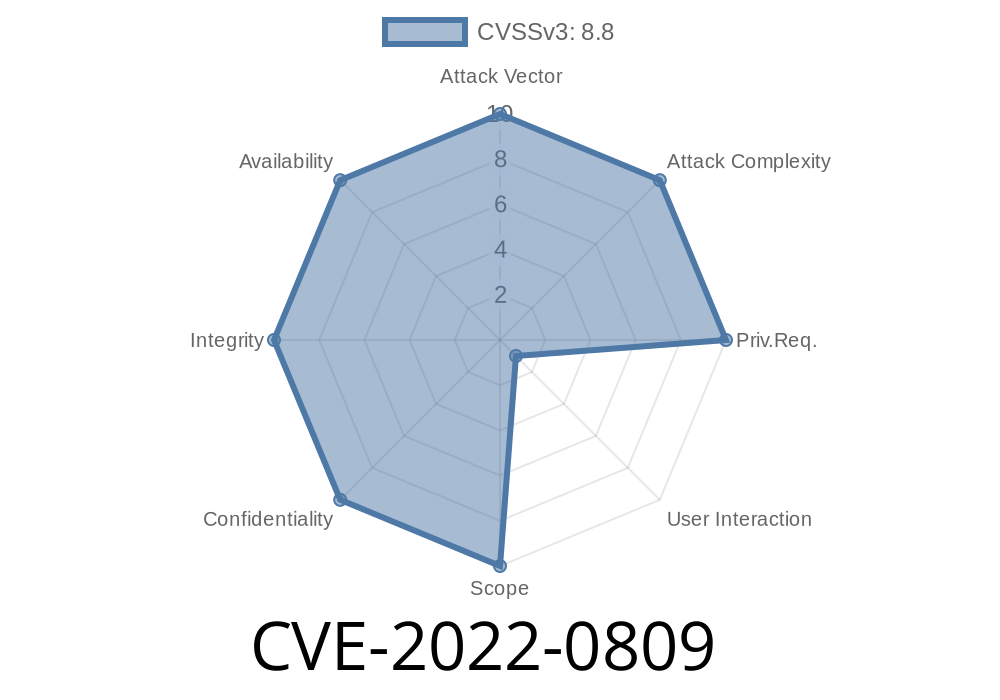
CVE-2022-0809 In WebXR, out of bounds memory access allowed a remote attacker to exploit heap corruption.
This issue was fixed in version 99.0.4844.51. Google determined that this issue did not pose a significant security risk as no remote
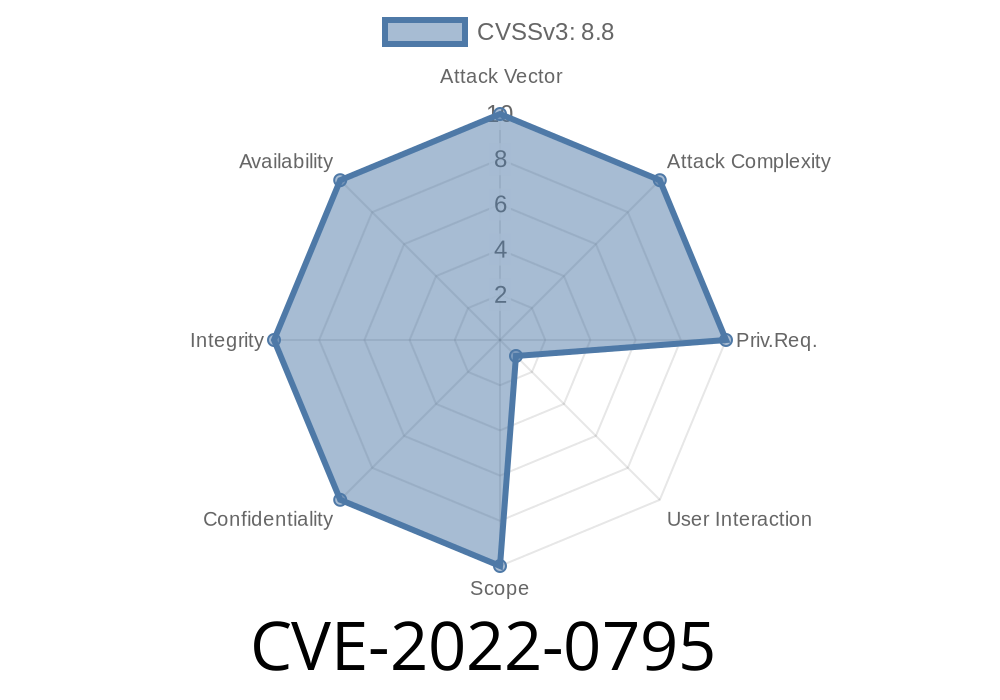
CVE-2022-0795 Heap corruption could be exploited via a crafted HTML page in Google Chrome prior to 99.0.4844.51.
CVE-2017-15418 In Blink, in the Web Inspector, Google Chrome prior to version 66 allowed attackers to inject scripts or HTML into a module via the
Episode
00:00:00
00:00:00