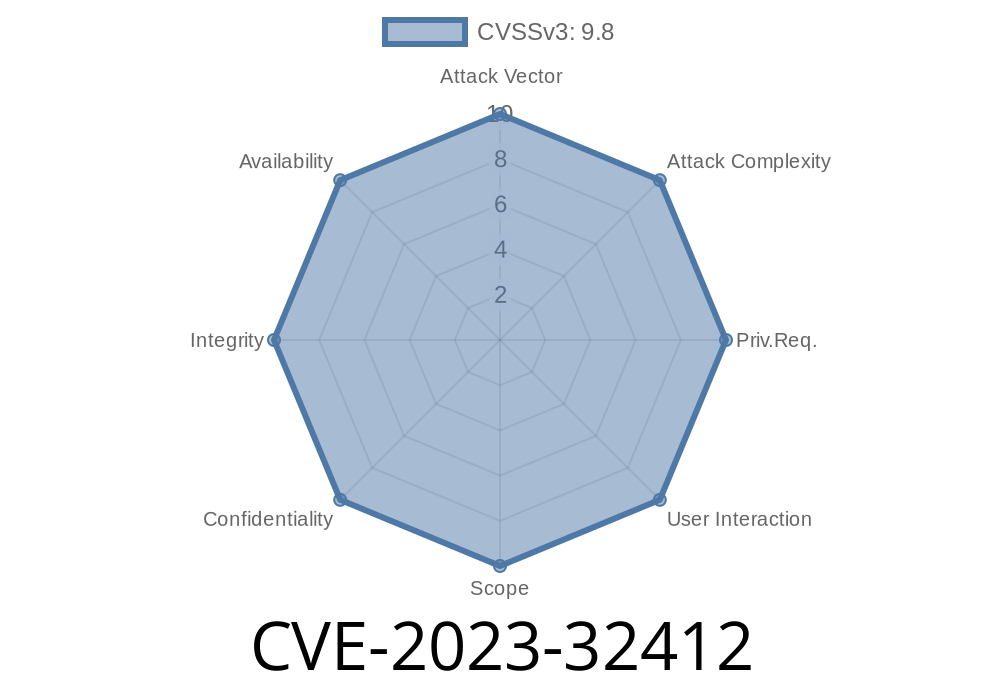
In mid-2023, Apple patched a serious security issue, tracked as CVE-2023-32412. This bug affected a wide range of Apple devices and systems—including iPhones, iPads, Macs, Apple TVs, and Apple Watches. In this post, I'll break down what happened, why it was dangerous, how it was fixed, and show real-world attack details in simple language.
What Is CVE-2023-32412?
CVE-2023-32412 is a use-after-free vulnerability. This kind of bug happens when an application keeps using memory *after* it has been released (freed). For attackers, this is a golden opportunity: if they can get their own code or data into that released memory zone, they might take control of the process or crash it.
iOS 16.5 and iPadOS 16.5
Apple Security Release Notes - CVE-2023-32412
Where Was the Vulnerability?
Apple didn’t publish the exact source code, but the bug was in the WebKit engine. WebKit is the part of Safari and many apps that handles everything related to loading and displaying web pages.
If an attacker could get you to open a specific malicious web page, that page could trigger a complex bug in WebKit’s memory management code—resulting in a use-after-free condition.
Let's see what this concept means with simple code
// Pseudocode: An example of use-after-free
char* buf = malloc(10);  // allocate memory
free(buf);               // free memory

// Oops! Keep using the pointer after it's freed
strcpy(buf, "HACKED!");  // use-after-free situation
After buf is freed, it should not be used. If attackers can predict or control what happens to that chunk of freed memory—or force it to contain their own data—they can hijack the app’s logic.
A real-world attacker could
1. Craft a web page with special JavaScript that triggers certain WebKit behaviors known to cause this bug.
Cause the app to use the pointer again, which now actually points to data the attacker controls.
With clever tricks, this lets them run code or crash your Safari browser or any app relying on WebKit.
Example Exploit Snippet (Pseudocode/JS)
let victimArray = new Array(100).fill(1);
victimArray = null; // Trigger garbage collection/free

// Now spray memory with attacker-controlled objects
let spray = [];
for(let i=; i<10000; i++) {
    spray.push({evil: "payload", more: "data"});
}

// Try to access the use-after-free object
// (In real attack, this triggers code execution or crash)
Note: Real exploits are *much* more complex—this is a simplified demonstration.
App Crash: The most likely effect if just random data ends up being accessed.
- Arbitrary Code Execution: The worst case; if the attacker sets up everything just right, they could make Safari or another app run their own harmful code, steal your data, or escalate privileges.
- Remote Takeover: Since just visiting a webpage could trigger the exploit, your device is at risk as soon as you're online.
Making sure pointers can't be used after the underlying memory is freed.
After the patches, even if an attacker tries the previous tricks, the memory is managed in a way that prevents use-after-free.
You can see the official fixes in the Apple changelogs for each platform
- iOS 16.5 and iPadOS 16.5 security content
- macOS Ventura 13.4 security content
How To Stay Safe
- Update Your Devices: Make sure you install the latest OS updates for your iPhone, iPad, Mac, Apple TV, and Apple Watch.
Beware Suspicious Websites: Exploits often start with a single malicious website or link.
- Use Built-in Security Features: Turn on automatic updates, use Safari’s anti-tracking protections, and avoid turning off security features for “performance.”
References
- Apple Security Updates
- MITRE CVE Page for CVE-2023-32412
- WebKit Security Advisory
Summary
CVE-2023-32412 is a serious security bug in Apple’s WebKit. It allowed remote attackers to run code or crash apps, just by getting you to visit a website. Apple’s fix was to improve memory management, stopping use-after-free errors in their tracks.
The key takeaway: Always keep your devices updated and be aware of how sneaky web-based attacks can be.
*Thanks for reading! If you want more deep dives like this, let me know.*
Timeline
Published on: 06/23/2023 18:15:00 UTC
Last modified on: 07/27/2023 04:15:00 UTC